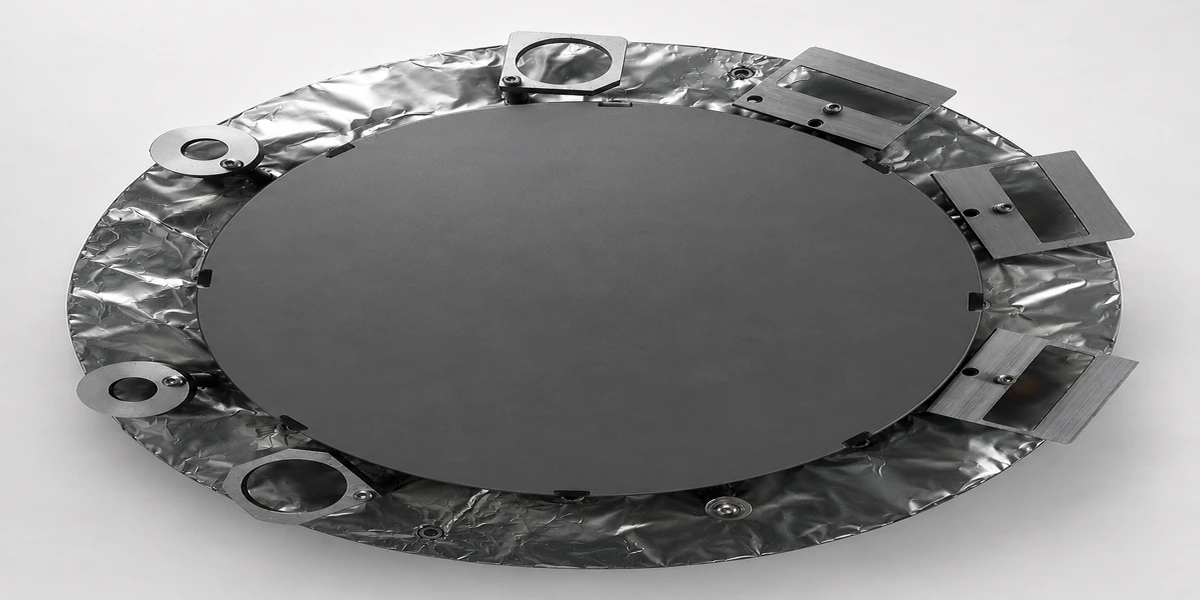
Overview: Silicon Cladding for Lightweight Mirrors
Large-aperture far-ultraviolet (FUV) space telescopes demand extremely low optical surface roughness, but aluminum — the preferred FUV reflector — is difficult to polish directly to that quality; diamond-turned aluminum typically leaves tens to hundreds of angstroms RMS of residual roughness, increasing scatter at short wavelengths. ZeCoat's proprietary silicon cladding technology solves this by depositing a thick, homogeneous layer of high-purity silicon that can be figured and polished with conventional optical techniques, giving aluminum and other lightweight substrates an optical-quality finish. Originally developed under NASA and Department of Defense programs, the process also applies to silicon carbide, metal-composite structures, beryllium, and carbon-based composites that are otherwise difficult to polish directly.